


 (
(

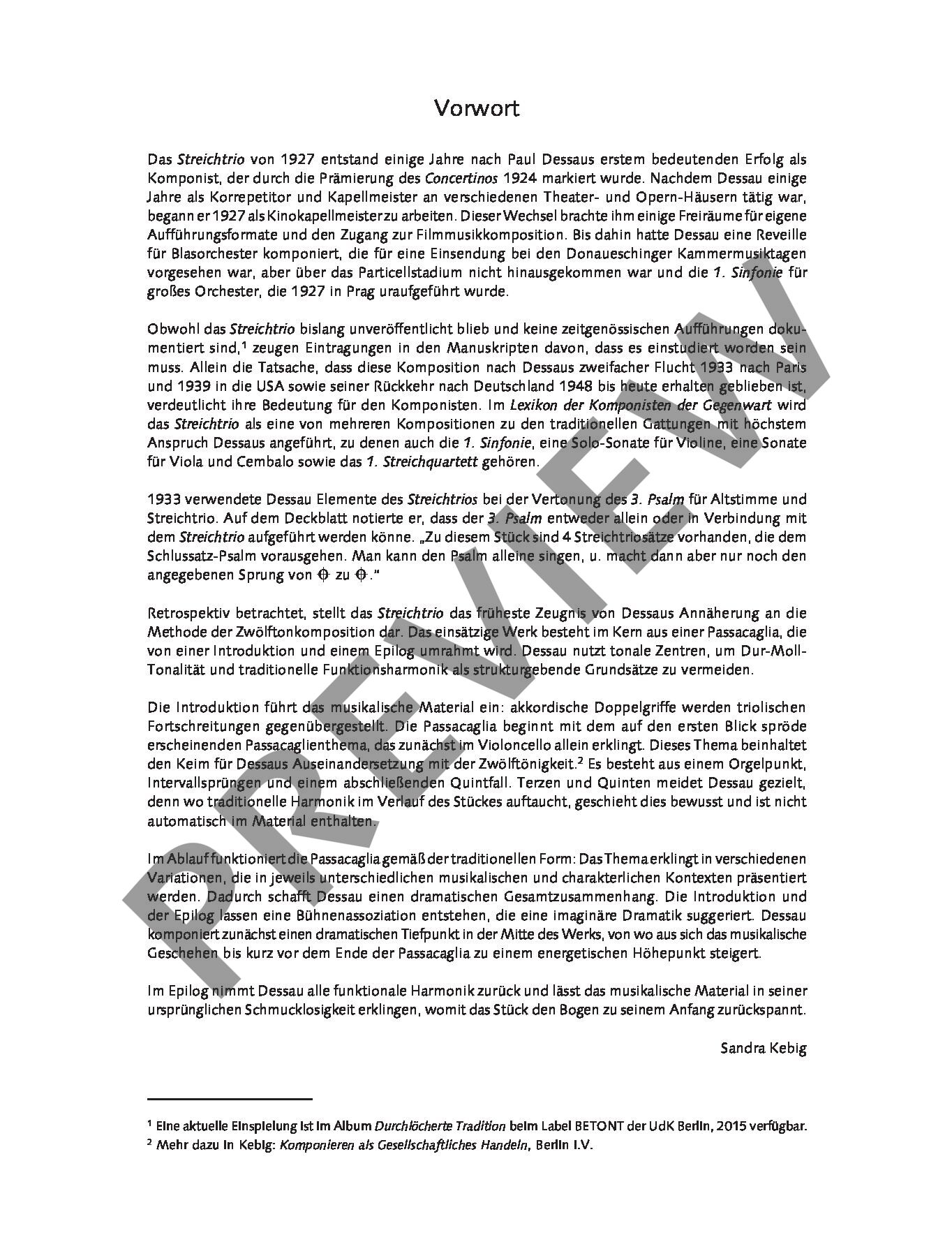
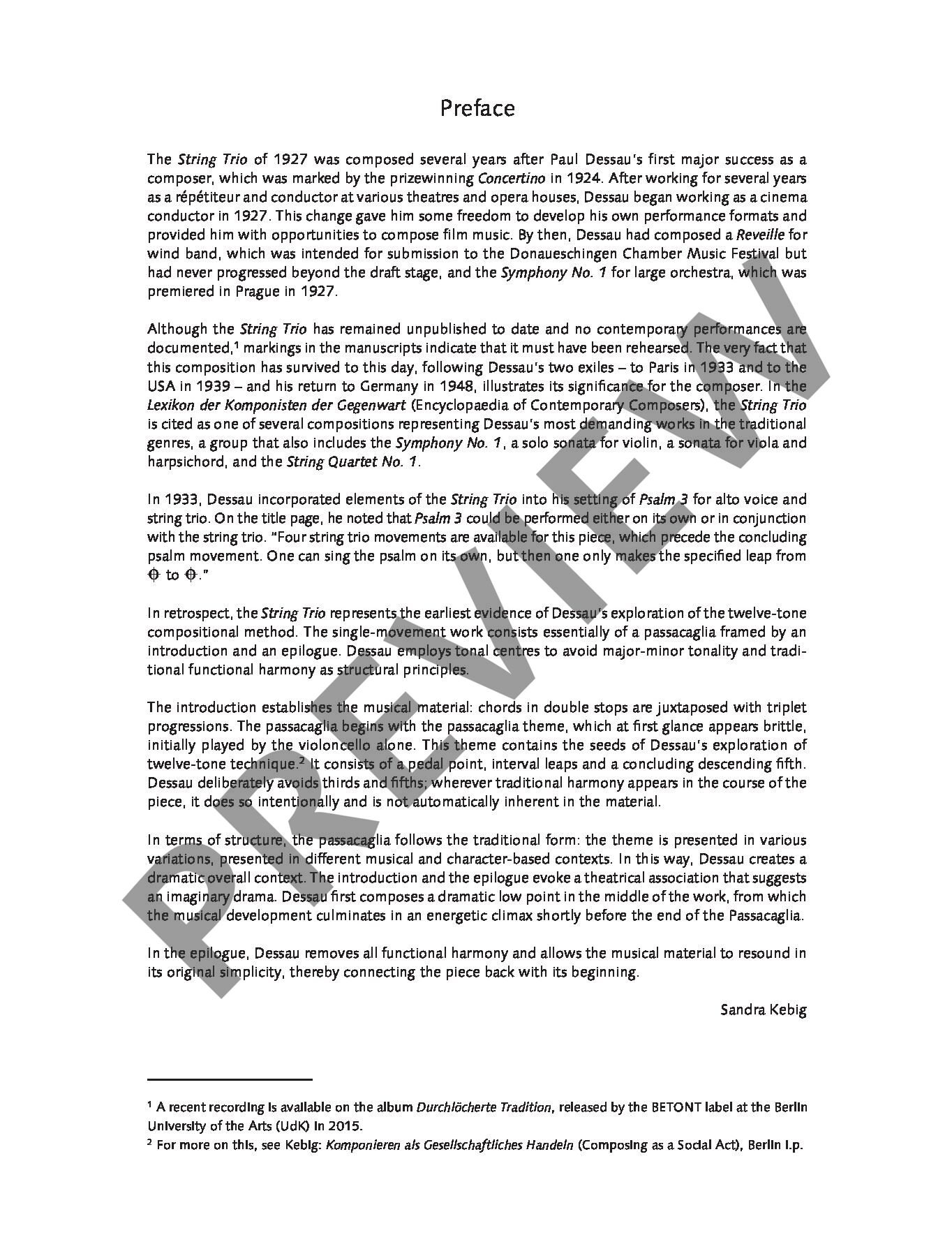
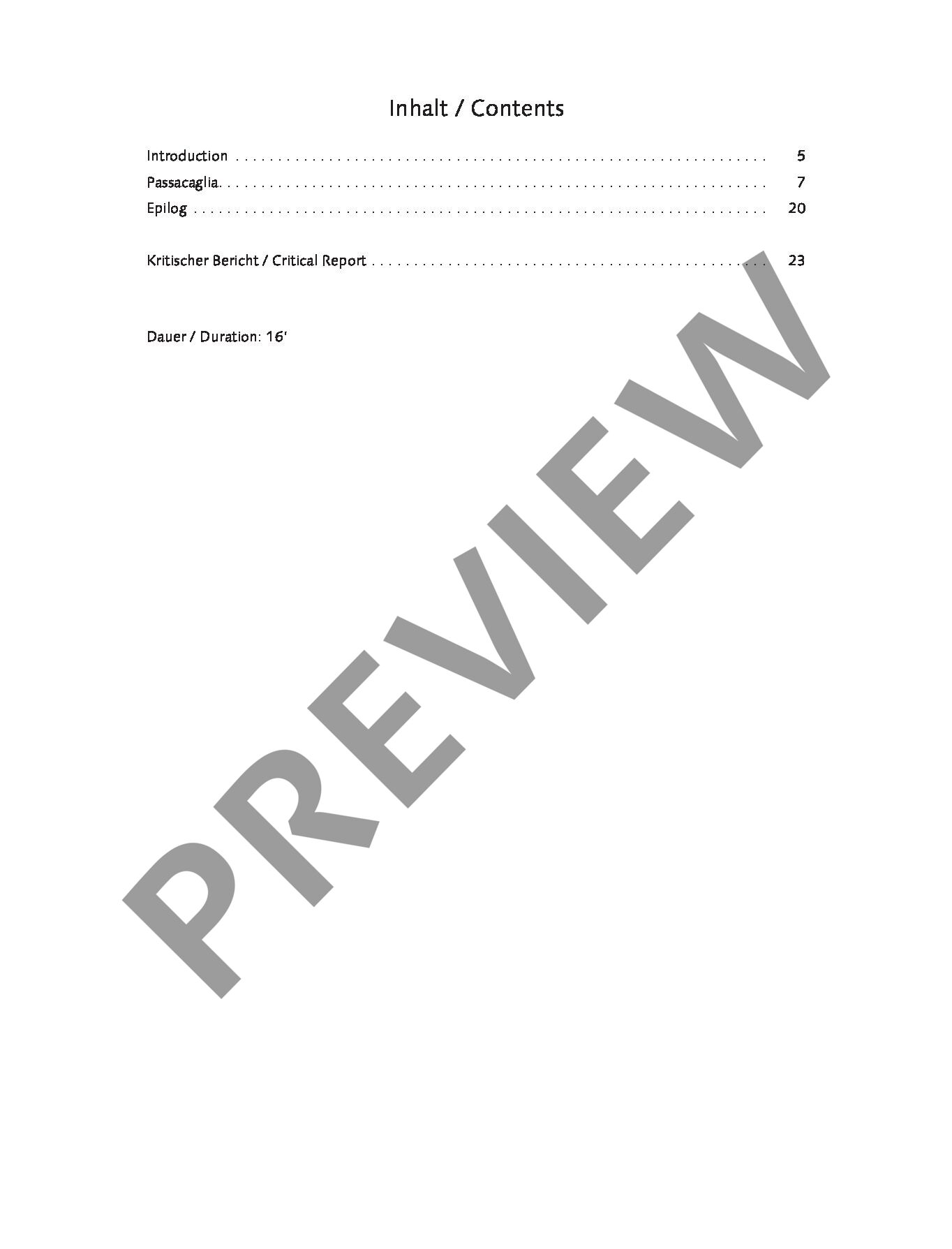
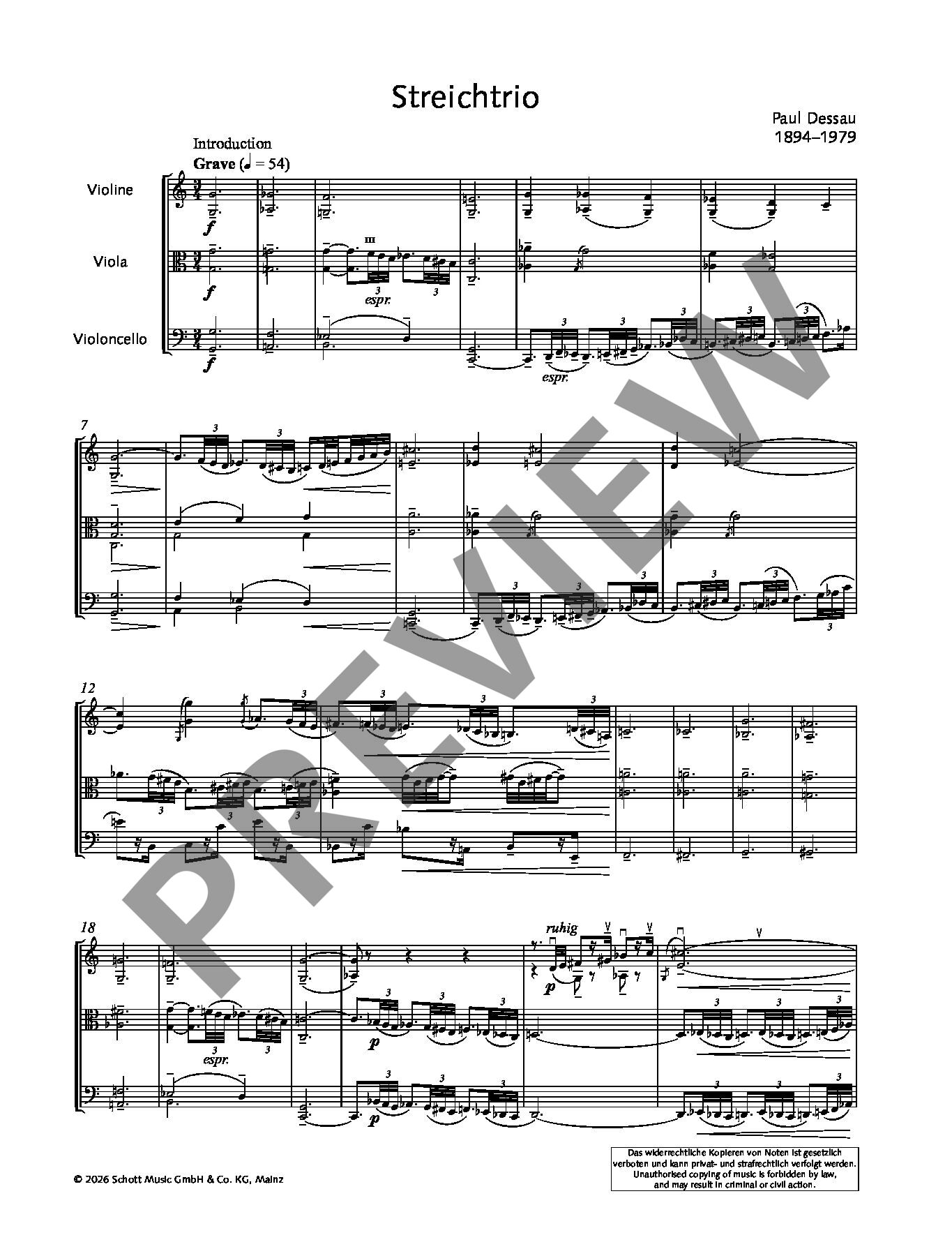
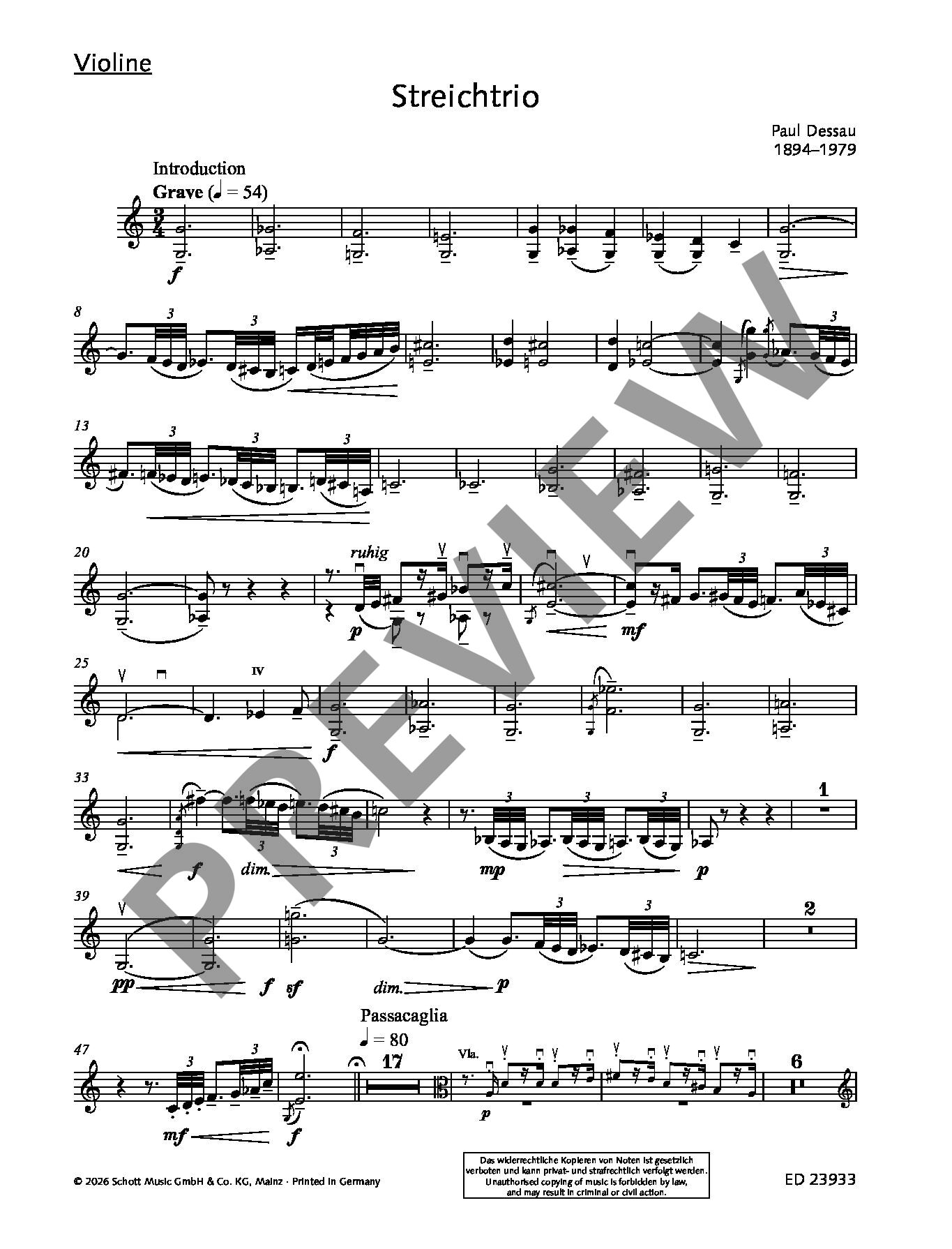
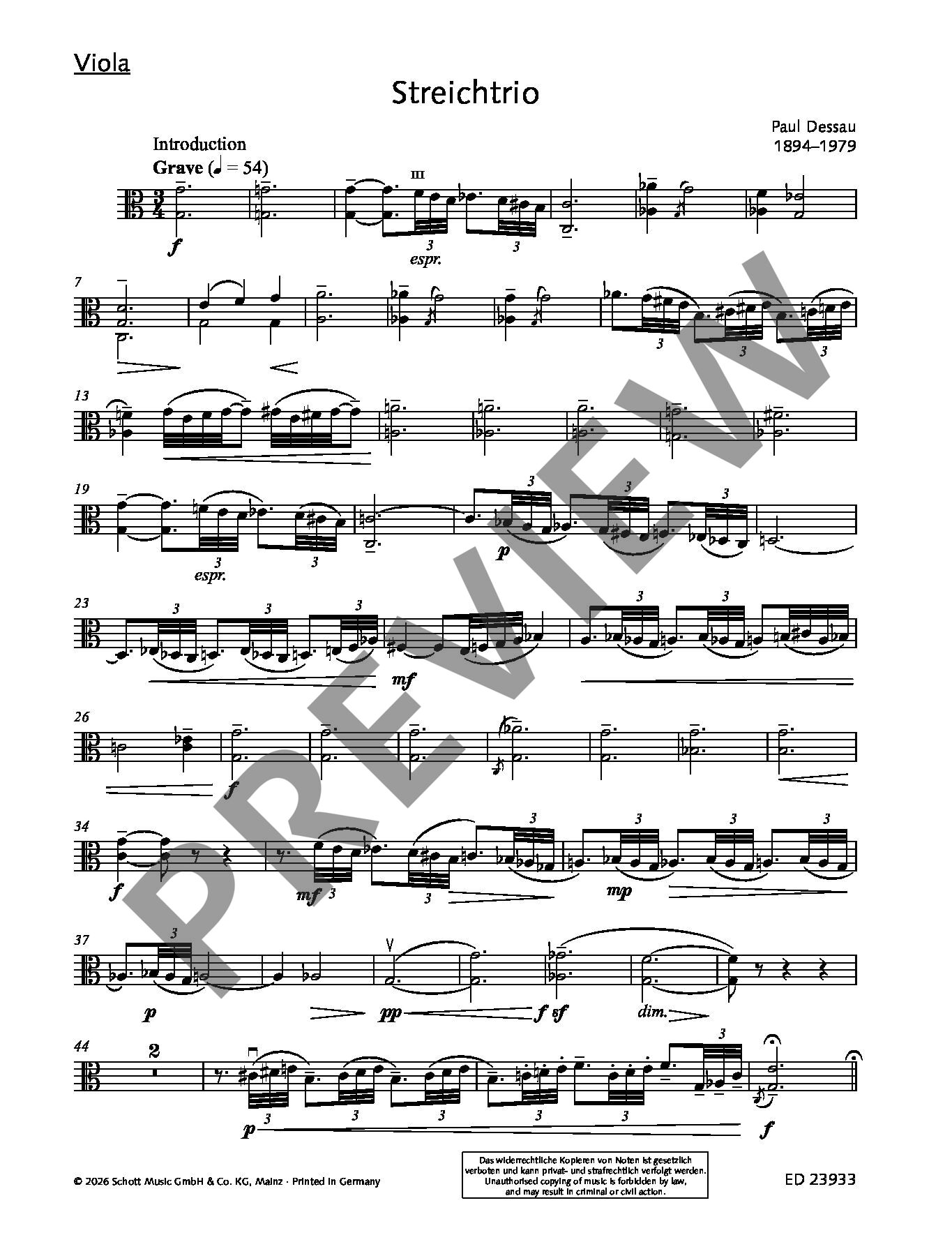
The String Trio of 1927 was composed several years after Paul Dessau’s first major success as a composer, which was marked by the prizewinning Concertino in 1924. After working for several years as a répétiteur and conductor at various theatres and opera houses, Dessau began working as a cinema conductor in 1927. This change gave him some freedom to develop his own performance formats and provided him with opportunities to compose film music. By then, Dessau had composed a Reveille for wind band, which was intended for submission to the Donaueschingen Chamber Music Festival but had never progressed beyond the draft stage, and the Symphony No. 1 for large orchestra, which was premiered in Prague in 1927. In retrospect, the String Trio represents the earliest evidence of Dessau’s exploration of the twelve-tone compositional method. The single-movement work consists essentially of a passacaglia framed by an introduction and an epilogue. Dessau employs tonal centres to avoid major-minor tonality and traditional functional harmony as structural principles. The introduction establishes the musical material: chords in double stops are juxtaposed with triplet progressions. The passacaglia begins with the passacaglia theme, which at first glance appears brittle, initially played by the violoncello alone. This theme contains the seeds of Dessau’s exploration of twelve-tone technique. It consists of a pedal point, interval leaps and a concluding descending fifth. Dessau deliberately avoids thirds and fifths; wherever traditional harmony appears in the course of the piece, it does so intentionally and is not automatically inherent in the material. In terms of structure, the passacaglia follows the traditional form: the theme is presented in various variations, presented in different musical and character-based contexts. In this way, Dessau creates a dramatic overall context. The introduction and the epilogue evoke a theatrical association that suggests an imaginary drama. Dessau first composes a dramatic low point in the middle of the work, from which the musical development culminates in an energetic climax shortly before the end of the Passacaglia. In the epilogue, Dessau removes all functional harmony and allows the musical material to resound in its original simplicity, thereby connecting the piece back with its beginning. - Sandra Kebig
Composer/Author: Paul Dessau
Editor: Sandra Kebig
Instrumentation: violin, viola, cello
Format: PDF
Pages: 49
Brand: Schott Music
Similar items available in Violin
You might like these
Digital Download
Digital Download
Digital Download
Digital Download

Digital Download
Digital Download
Digital Download
Digital Download
Digital Download
Digital Download